","ad_server_empresa":"Troop","alto":"100","ancho":"1100","alto_mobile":null,"ancho_mobile":null,"image":"https://noticiasnqn-s3.cdn.net.ar/s3i233/2026/09/noticiasnqn/files/03/47/34721/3083b500825ef62836d6ab4f03c279b7e9db8366ab845f3bbb2a35f02ccb2d49.gif","image_mobile":null,"url":"https://1000obras.neuquen.gob.ar/","url_mobile":"https://1000obras.neuquen.gob.ar/","target":"_blank","target_mobile":"_blank"}])
","ad_server_empresa":"Troop","alto":"250","ancho":"950","alto_mobile":"600","ancho_mobile":"300","image":"https://noticiasnqn-s3.cdn.net.ar/s3i233/2026/06/noticiasnqn/files/03/14/31451/f561717e8be052cdd9ea70a227f1077bc5fe25896e49ddfe996db7508cf00534.jpg","image_mobile":"https://noticiasnqn-s3.cdn.net.ar/s3i233/2026/06/noticiasnqn/files/03/14/31452/64ed1919b0810b933876e6b130ec2bd8090e09f6efa6202aa9f9d5f450aa8177.jpg","url":"https://viapago.com.ar/app/","url_mobile":"https://viapago.com.ar/app/","target":"_blank","target_mobile":"_blank"},{"id":"352","zonas_id":"352","zona":"BUSKO X4","ad_server":"Ad Server Troop","denominacion":"BUSKO DESCUENTO 2","banners_id":"193","banners_tipos_id":"1","banners_versiones_id":"2","version_banner":"Diferenciada ( Desktop / Mobile )","ad_server_empresa":"Troop","alto":"250","ancho":"950","alto_mobile":"600","ancho_mobile":"300","image":"https://noticiasnqn-s3.cdn.net.ar/s3i233/2026/06/noticiasnqn/files/03/14/31453/960c1a86549d7a5b0b1a77da293534f0223b8a4bd884f01d8f1f94a8b0b1f97b.jpg","image_mobile":"https://noticiasnqn-s3.cdn.net.ar/s3i233/2026/06/noticiasnqn/files/03/14/31454/b15e97729c44f3cdff11fd1b513452a7b63b53cfaa9a5da9df499fd91469192d.jpg","url":"https://viapago.com.ar/app/","url_mobile":"https://viapago.com.ar/app/","target":"_blank","target_mobile":"_blank"},{"id":"352","zonas_id":"352","zona":"BUSKO X4","ad_server":"Ad Server Troop","denominacion":"BUSKO DESCARGA","banners_id":"196","banners_tipos_id":"1","banners_versiones_id":"2","version_banner":"Diferenciada ( Desktop / Mobile )","ad_server_empresa":"Troop","alto":"250","ancho":"950","alto_mobile":"600","ancho_mobile":"300","image":"https://noticiasnqn-s3.cdn.net.ar/s3i233/2026/06/noticiasnqn/files/03/14/31455/1b4f517c816409096cd6a708abb4fcb56f0cdeedf664c24860cba8842e94b300.jpg","image_mobile":"https://noticiasnqn-s3.cdn.net.ar/s3i233/2026/06/noticiasnqn/files/03/14/31456/70c09159c9a6bc3393dadb3ae8d615548046ec866d88048a47e7ffafdfb9e24a.jpg","url":"https://viapago.com.ar/app/","url_mobile":null,"target":"_blank","target_mobile":"_blank"},{"id":"352","zonas_id":"352","zona":"BUSKO X4","ad_server":"Ad Server Troop","denominacion":"busko prestamos 4","banners_id":"199","banners_tipos_id":"1","banners_versiones_id":"2","version_banner":"Diferenciada ( Desktop / Mobile )","ad_server_empresa":"Troop","alto":"250","ancho":"950","alto_mobile":"600","ancho_mobile":"300","image":"https://noticiasnqn-s3.cdn.net.ar/s3i233/2026/06/noticiasnqn/files/03/14/31457/192c4693a92b81f8fb909bfdfe52df171107bcdc49d29e521a91da172e408fea.jpg","image_mobile":"https://noticiasnqn-s3.cdn.net.ar/s3i233/2026/06/noticiasnqn/files/03/14/31458/a32dbc038a162b770d77de67312b2dbf33805671920f0d02e6d18f630985aace.jpg","url":"https://viapago.com.ar/app/","url_mobile":"https://viapago.com.ar/app/","target":"_blank","target_mobile":"_blank"}])
PMP Certification 2026: Eligibility and Experience Requirements
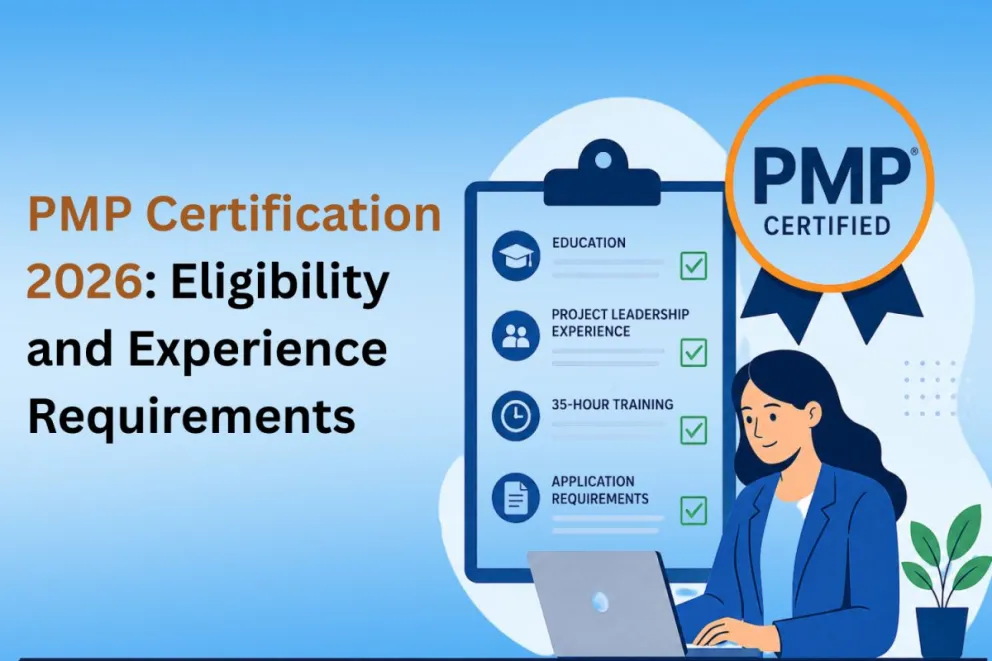
Have you been managing projects and wondering whether your experience is enough to pursue a recognised project management credential in 2026? The answer depends on your education, project leadership experience and professional training. The updated requirements also reflect changes introduced alongside the 2026 PMP exam.
PMP Certification can strengthen your professional profile and demonstrate that you can lead projects across different working approaches. But before you apply, it is important to understand exactly what PMI expects from you. In this blog, we will explore the PMP Certification eligibility routes and experience requirements for 2026.
Table of Contents
- PMP Certification Eligibility Routes for 2026
- PMP Certification Requirements for 2026
- Conclusion
PMP Certification Eligibility Routes for 2026
The following 2026 requirements give candidates several routes based on their educational background and project leadership experience:
A High School or Secondary Qualification
If you have completed upper secondary education, such as a high school qualification or equivalent, you can still work towards the PMP qualification.
You need at least 60 months of professional experience leading and managing projects within the past 10 years. You must also meet the required professional training condition.
An Associate Level Qualification
Candidates with a recognised associate level, higher certificate or vocational qualification have another route.
Under the 2026 requirements, this route requires 48 months of professional experience leading and managing projects. The experience must be professional and non-overlapping.
This can be useful if you have practical project experience but do not hold a traditional university degree.
A Bachelor’s Degree or Higher
You need 36 months of professional experience leading and managing projects within the past 10 years.
This is one of the most common paths for experienced professionals seeking PMP Certification.
A PMI GAC Accredited Degree
There is also a shorter experience route for graduates of programmes accredited by the PMI Global Accreditation Centre.
Candidates with an eligible degree from a PMI GAC accredited programme need 24 months of professional experience leading and managing projects.
This route can be particularly valuable for graduates who have completed structured project management education.
PMP Certification Requirements for 2026
Below are the key PMP Certification requirements for 2026 that candidates need to meet before applying:
What Does Project Leadership Experience Mean?
This is where many candidates become unsure.
PMI expects applicants to demonstrate professional experience leading and managing projects. Simply participating in a project does not necessarily mean that the experience meets PMI’s project leadership requirements.
Think about your actual responsibilities. Did you coordinate people? Did you make project decisions? Did you manage delivery? These details matter when preparing your application.
Understanding the 35-Hour Training Requirement
Education is another important part of the PMP eligibility requirements.
Most applicants need 35 hours of project management training. This can come from an eligible training course or provider. An active CAPM certification can also satisfy this training requirement.
PMI has also announced a planned change for live training eligibility in late Q4 2026. From the announced effective date, live training will need to come from approved providers or eligible academic programmes. Self-paced training will continue to have broader provider options.
Can Your Job Experience Qualify?
Your job title alone does not determine whether your experience meets the PMP requirements.
Relevant experience may come from roles such as Project Coordinator, Team Leader, Consultant or Business Analyst, provided your responsibilities involved leading and managing projects.
What matters is the project leadership responsibility you actually handled.
Keep clear records of your projects, responsibilities, dates and outcomes. Keeping clear records can make the PMP application process easier to complete.
How Should You Record Your Experience?
Start by creating a clear record of the projects you have led or managed.
Include the project name, organisation, dates, your responsibilities and your role in leading the work. If projects overlap, do not count the same period of experience more than once.
It is also useful to describe what you actually did rather than simply listing a job title. Clear and specific descriptions can make your project experience easier to understand during the application review.
What If You Do Not Meet the Experience Requirement?
If you do not yet meet the required experience threshold, consider gaining additional project leadership experience before applying.
You may need to gain more project leadership experience before applying. Depending on your career stage, you could also consider an entry level project management certification such as CAPM.
Building practical experience first can make your later PMP Certification journey much smoother.
Conclusion
Understanding PMP Certification eligibility and experience requirements can help you identify the right route before starting your application. Your educational background determines the experience pathway, while project leadership experience and professional training are key requirements you must meet.
The Knowledge Academy, a global training provider, offers PMP Certification that can support your preparation and help you approach the certification process with greater confidence.